



To glue pull a dent, clean the panel with isopropyl alcohol, pick a tab slightly smaller than the dent, glue it to the exact center, let the glue set hard, then pull slowly with a mini lifter or slide hammer. Release the tab with alcohol, check the panel under a light, tap down any high spot, and repeat with a smaller tab until the reflection runs straight. That is how to glue pull a dent in one paragraph. This guide covers the parts that decide whether it works: the tab, the glue for the day's temperature, and the pull sequence that finishes the last ten percent.
Key takeaways
- Clean paint is half the pull: wax, polish and fingerprints stop the glue from gripping.
- The tab is smaller than the dent and follows its shape, so it lifts the low center, not the edges.
- Match the glue to the temperature: a standard stick, a summer stick, or cold glue in winter.
- Wait until the glue is hard, then pull slowly. Small pulls, often, beat one hard pull.
- Most dents need several cycles of pull, read, tap down and a smaller tab.
When glue pulling is the right repair
Glue pulling is the right repair when you cannot get a tool behind the dent, or when pushing from behind would take longer than pulling from the front. It works best on shallow, smooth dents with intact factory paint.
Roof rails, braced areas, double-skinned panels and dents over a cross bow are typical glue pull work. The GYS technical training manual for dent repair describes glue pulling as a method for small to medium, generally shallow dents, because the metal needs enough elasticity to come back: smooth dents, shallow creases and hail dings. If you are working a hail roof, our roof hail repair workflow shows where glue pulling fits next to rods and access holes.
Be careful on repainted panels. The Eastwood dent pulling kit manual warns that a pull can lift paint, and that this is less likely on factory paint than on refinished surfaces. Cracked or chipped paint is a stop sign: that panel needs body and paint work, not glue.
Prepare the panel and the tabs
Preparation decides whether the glue grips. Most "the tab just popped off" stories start with a dirty or cold panel, not with bad glue.
- Clean the panel. Wipe the dent and the area around it with isopropyl alcohol and a clean towel until no wax, polish or grease is left. Ding King's glue pulling instructions use 91% isopropyl alcohol for this step.
- Clean new tabs too. The same instructions soak new tabs in alcohol and dry them before their first use, so no factory film sits between the tab and the glue.
- Check the panel temperature. Ding King notes that the process works best when the panel is between 60 and 80°F (about 16 to 27°C). Keep the panel out of direct sun so the glue can set, and let a cold panel warm up before you start.
- Read the dent first. Put a line board or PDR light on the panel so you can see the dent's size, shape and lowest point before you choose a tab.
How to choose a glue pull tab
Choose a tab that is slightly smaller than the dent and follows its shape. The GYS manual puts it plainly: the tab must be smaller than the dent because it has to lift the bottom of the dent.
| Dent | Tab | Why |
|---|---|---|
| Small round ding | Small round tab, smaller than the dent | Lifts the low center without pulling up the edges |
| Larger soft dent | Bigger round or oval tab first, then smaller ones | Moves the bulk of the metal, then refines the center |
| Shallow crease | Long, narrow crease tab laid along the crease | Spreads the pull along the line instead of one point |
| Long dent or crease on a line | Centipede tab (5 or 10 cm) | Distributes the pulling force evenly over the length |
| Final 10 to 20% | The smallest tab that still grips | Pulls only the remaining low spot |
A tab that is too big is one of the most common mistakes. It grips the edges of the dent, lifts them, and leaves the low spot in the middle, as the AutoBodyRepairs.net glue pulling guide lists among its common errors. Keep a range of sizes and shapes on hand; our glue tabs collection has round, crease, dome and centipede tabs in single sizes and sets.
Match the glue to the temperature
PDR glue is not one product for every day. Hot melt glue that holds well in a 20°C workshop can stay soft on a hot afternoon and grip poorly on a cold morning, so many technicians carry more than one glue.
| Glue | Working range | Use it for |
|---|---|---|
| Standard hot glue stick | 15 to 25°C (59 to 77°F) | Daily workshop work at room temperature |
| Summer hot glue stick | 25 to 45°C (77 to 113°F) | Hot months, warm shops and outdoor jobs in the heat |
| Cold glue, winter range | -15 to +30°C (5 to 86°F) | Cold days and outdoor or mobile work without a heat source |
| Cold glue, warm range | 1 to 50°C (34 to 122°F) | Hot weather, mobile repairs |
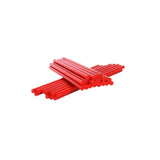
The ranges above are the stated ranges of our own glues. The DentPDR White Glue Sticks are the standard series for 15 to 25°C workshops, and the Gold Glue Sticks cover the 25 to 45°C summer range. DentPDR Cold Glue (-15°C to +30°C) needs no glue gun, lighter or heat source: you activate it by hand and it is ready in seconds, which makes it the practical choice for winter and mobile work.
How to glue pull a dent: the sequence, step by step
The sequence is the same for every glue pull: glue, set, pull, release, read, tap down, then repeat with a smaller tab. The skill is in the repeats.
- Apply the glue to the tab. Ding King suggests a pea-sized drop for small tabs and a dime-sized drop or a little more for larger ones.
- Set the tab in the exact center of the dent. Press lightly. Pressing too hard squeezes the glue layer too thin and weakens the bond.
- Let the glue set. Wait until the glue is hard to the touch. If a fingernail still leaves a mark, give it a few more minutes. Pulling too early tears the tab loose and leaves the dent where it was.
- Pull slowly. Use a mini lifter with several slow squeezes on small, soft dents, or a slide hammer with light, controlled hits on larger and deeper ones. Watch the metal, not the tool.
- Release the tab. Put a few drops of isopropyl alcohol at the edge of the glue and lift it off with a plastic scraper. Never use metal on the paint.
- Read the panel. Check the area under the line board. A good pull usually leaves a small high spot or crown.
- Tap down the high. Use a knockdown pen and a light hammer in small, gentle taps. Hitting too hard makes new low spots.
- Repeat with a smaller tab. As the dent gets smaller, the tab gets smaller. The AutoBodyRepairs.net guide puts most dents at 3 to 6 pulls; Ding King says up to ten cycles is not unusual.
Glue pulling also takes time. The PDR procedure guidelines published by Incidents PDR note that glue pulling takes significantly longer than pushing, so price glue pull work accordingly.
Mini lifter or slide hammer?
Use a mini lifter for small and medium soft dents and for finishing, and a slide hammer for larger, deeper dents that need more force. Both pull the same tabs; the difference is control.
A lifter rests its feet on the panel around the dent and pulls in small, measured steps, which makes overshooting harder. A slide hammer gives more force, and it is easy to give too much. Whichever you use, start soft. You can always pull again; taking out a high spot costs more time than one more pull.
Why glue pulls fail and how to fix them
When a glue pull fails, the cause is almost always prep, glue, timing or force. Work through them in that order.
- The tab pops off and the dent does not move: clean the panel and the tab again, let the glue set longer, and check the panel temperature.
- The glue stays soft or strings: the panel or the day is too hot for that glue. Move into the shade, let the panel cool, or switch to a summer stick.
- The glue lets go on a cold panel: warm the panel, or use cold glue made for low temperatures.
- The edges come up, the center stays low: the tab is too big. Go down a size and set it on the lowest point.
- A high spot appears: the pull was too hard. Tap it down and pull softer next time.
- The paint lifts: stop. The panel may be refinished or the paint already weak; glue pulling is not the right repair there.
Frequently asked questions
How long should PDR glue set before pulling?
Until it is hard to the touch, which with hot glue usually takes a few minutes. Ding King's instructions give about five minutes and a simple test: if your fingernail still leaves a mark in the glue, wait longer. Pulling on warm, soft glue tears the tab loose without moving the dent.
What removes PDR glue from the paint?
Isopropyl alcohol. Put a few drops at the edge of the glue, wait a moment, and lift the glue off with a plastic scraper. The alcohol breaks the bond between the glue and the paint, so the glue comes off clean without scratching. Never use a metal blade on the paint.
Can you glue pull a dent in cold weather?
Yes, but standard hot glue struggles on a cold panel: it cools too quickly to grip well. Warm the panel first, or use cold glue made for low temperatures. Our winter cold glue works from -15 to +30°C and needs no glue gun or heat source.
Why does my glue tab keep popping off?
The usual causes are a panel with wax or polish on it, a cold panel, glue that has not fully set, or a tab that is too large for the dent. Clean the panel and the tab with isopropyl alcohol, match the glue to the temperature, wait until the glue is hard, and pull more slowly.
Can glue pulling fix a crease?
It can improve a shallow crease, using long crease tabs or centipede tabs laid along the line. Sharp creases usually need metal work as well: the Eastwood manual notes that creased edges need metalworking and cannot be removed with the kit alone.
Build your glue pull kit
A reliable glue pull kit is simple: isopropyl alcohol and a clean towel, a range of tabs in different sizes and shapes, the right glue for your climate, a mini lifter or slide hammer, a plastic scraper, and a knockdown pen with a light hammer for the highs. Start with tabs and the glue that fits your season, then add centipede and crease tabs as you take on longer dents.
Every DentPDR tool is made in our own facility and comes with a 1-year warranty and a 30-day free exchange. You can pay via PayPal, which adds PayPal's 180-day buyer protection.

